
Category: guide
-
Over the past five years, the residential real estate corridors of Nassau, Suffolk, and Queens have functioned as a pressure cooker for broader macroeconomic tremors. From the pandemic-fueled suburban migration frenzy of 2021 to the severe monetary policy tightening of 2022-2023, and the structural “lock-in” normalization of 2024-2026, the tri-county market has rewritten traditional valuation…
-
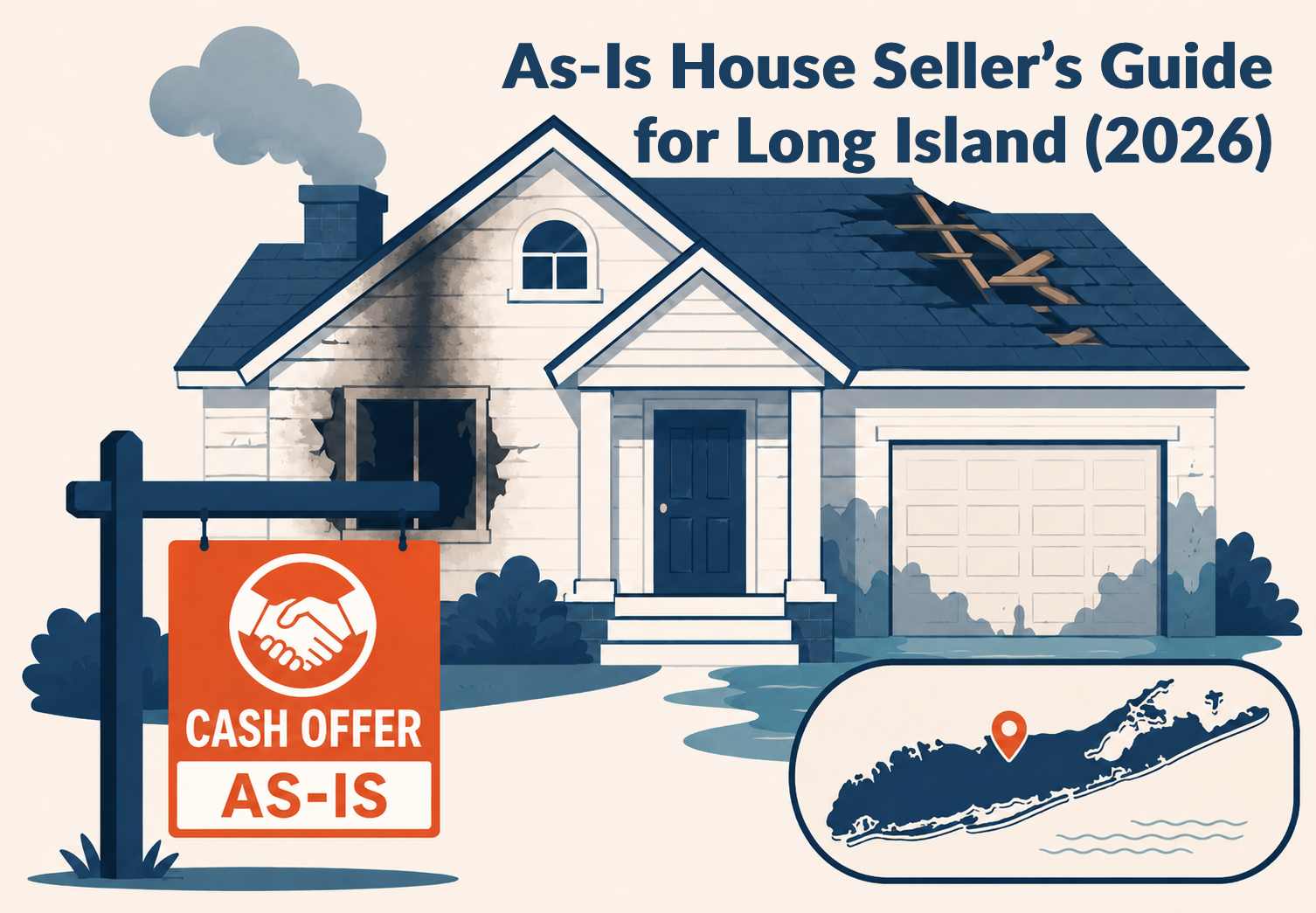
Professional Guide for 2026 Selling a damaged house on Long Island is not only about price. It is also about time, permits, legal disclosure, insurance issues, and how much work you can handle before closing. This guide is for homeowners dealing with serious problems like fire damage, flood damage, roof failure, leaks, or hoarding. The…
-

Selling a house on Long Island looks simple from the outside, but the numbers tell a different story. New York consistently ranks as one of the most complex and expensive states to close a residential real estate transaction, and Long Island adds its own local friction on top of that. Here is a few facts…
-
Why Renovation Risk Has Quietly Exploded in Nassau and Suffolk Counties Selling a home on Long Island has always required careful planning, but 2026 has introduced a new layer of risk that many sellers still underestimate. Renovation costs are no longer just higher. They are less predictable, more time-sensitive, and far more exposed to forces…
-
Many new investors lump all real-estate entrepreneurs together, assuming they follow the same playbook. In reality, Wholesalers, Fix-and-Flippers, and Buy-and-Hold investors operate in completely different lanes. Wholesalers act as transaction brokers, connecting motivated sellers with cash buyers. Fix-and-Flippers resemble small-scale developers, creating value through renovation. Buy-and-Hold investors behave like asset managers, building long-term income and…